Ikabana
Ikebana is the Japanese art of disciplined floral arrangement, a practice grounded in line, balance, restraint and the quiet authority of space. It’s less about flowers and more about intention, asking you to consider weight, gesture, negative space and the emotional temperature of a branch.
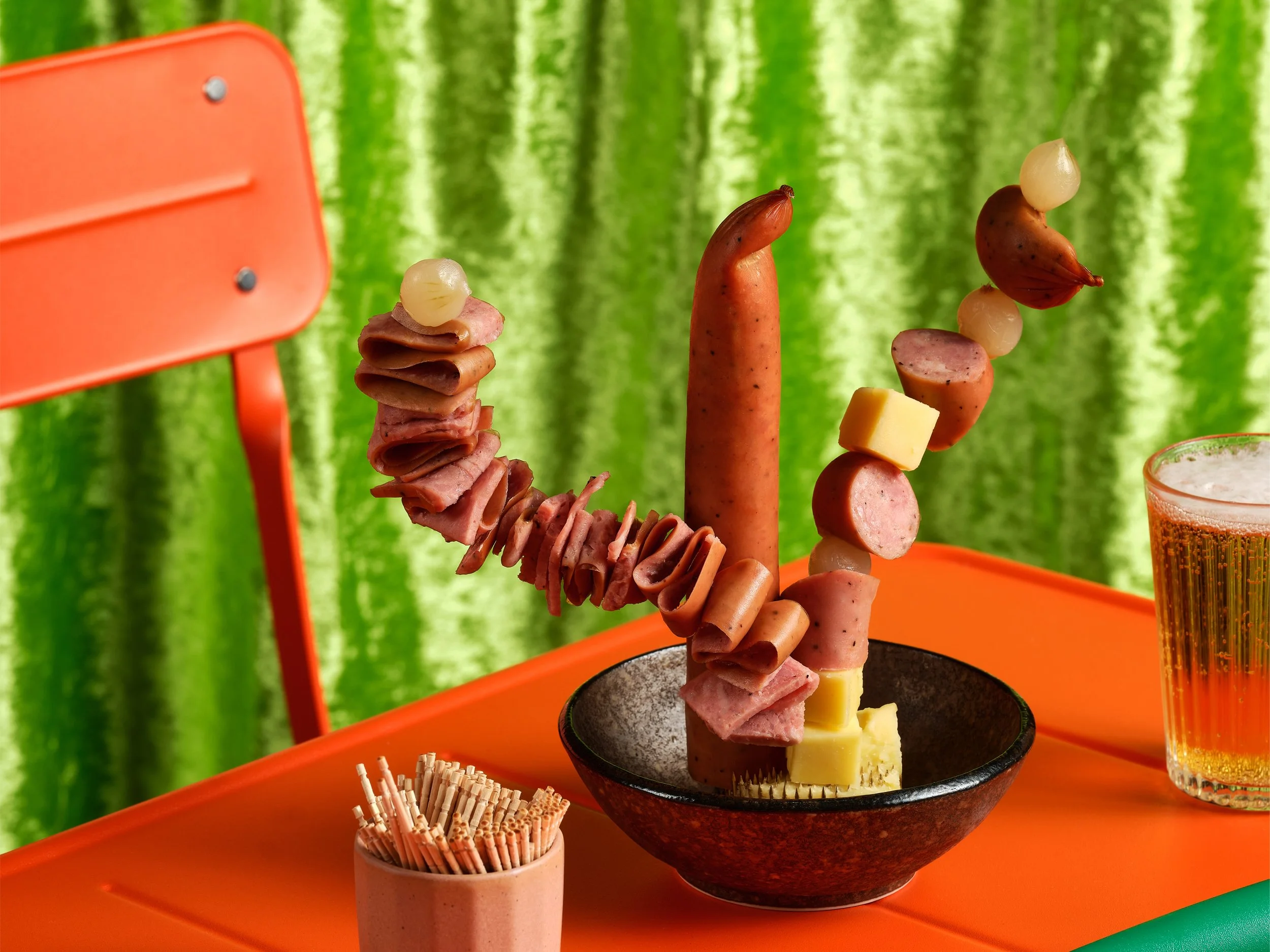
Somewhere between ikebana and kabana a new form emerges. An arrangement constructed not from blossoms but from cubes of cheese, cocktail onions and deli meat (?). A retro Australian grazing-table relic handled with near-religious restraint.
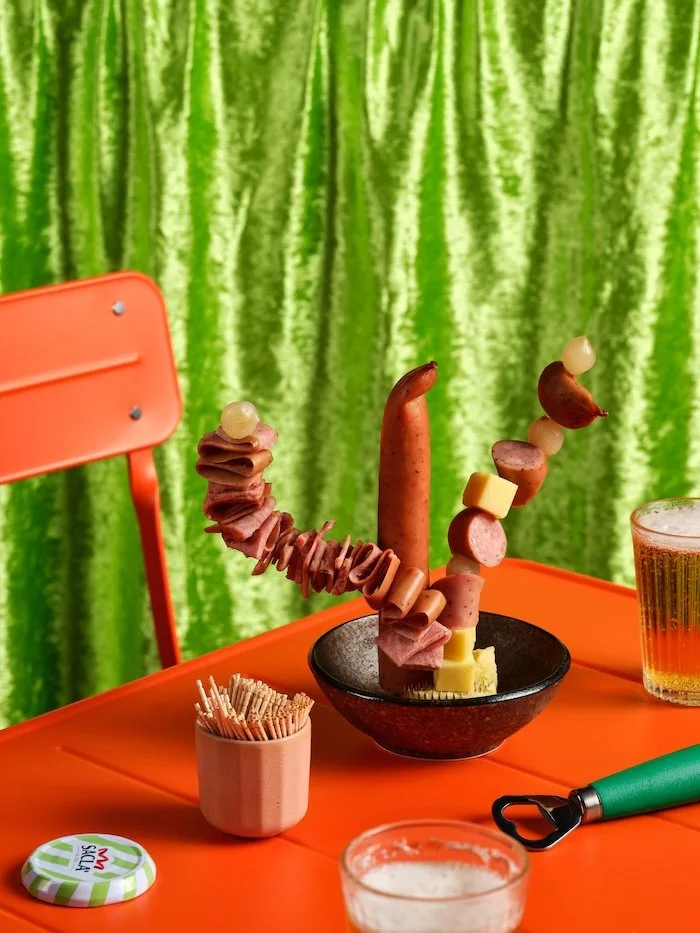
The upright kabana assumes the role of the shin, the central axis that grounds the composition. Two arms extend outward in deliberate asymmetry, one visually heavier, one lighter, creating rhythm rather than symmetry. Negative space is allowed to exist without apology. At its base a traditional kenzan in a humble bowl (probably from Kmart) performs the quiet function of anchoring and stability.
There’s something compelling about applying discipline to materials that were never designed for reverence. Fluorescent plastic furniture, a sweating beer, toothpicks waiting in a small vessel, all of it conspicuously domestic. Nothing is disguised. Nothing is pretending to be rarefied. And yet the structure insists on contemplation.
Composition doesn’t discriminate between cherry blossom and deli meat. Line is line. Balance is balance. Space is space. When suburban sausage is given the compositional dignity of a centuries-old Japanese art form, the material does not change but our perception does. A reminder that seriousness and humour are not opposites, they are adjacent.
Sometimes the ridiculous reveals the profound.
Sometimes a cocktail onion is just a cocktail onion.
And sometimes it becomes a study in form.